Welcome to our series of blogs where we have the opportunity to engage in conversation with Dr Alec MacKinnon, a renowned astrophysicist from the Department of Astrophysics at Glasgow University. It is a pleasure to have Dr MacKinnon with us as we delve into the fascinating world of astrophysics and explore the mysteries of the universe. In the lead up to the Wester Ross Biosphere Dark Skies event we will post weekly – so make sure to come back.
Dr MacKinnon will share his expertise, insights, and opinions on several topics, providing us with a deeper understanding of the universe we inhabit. So, sit back, relax, and join us on this journey of discovery as we explore the wonders of the cosmos with Dr Alec MacKinnon.
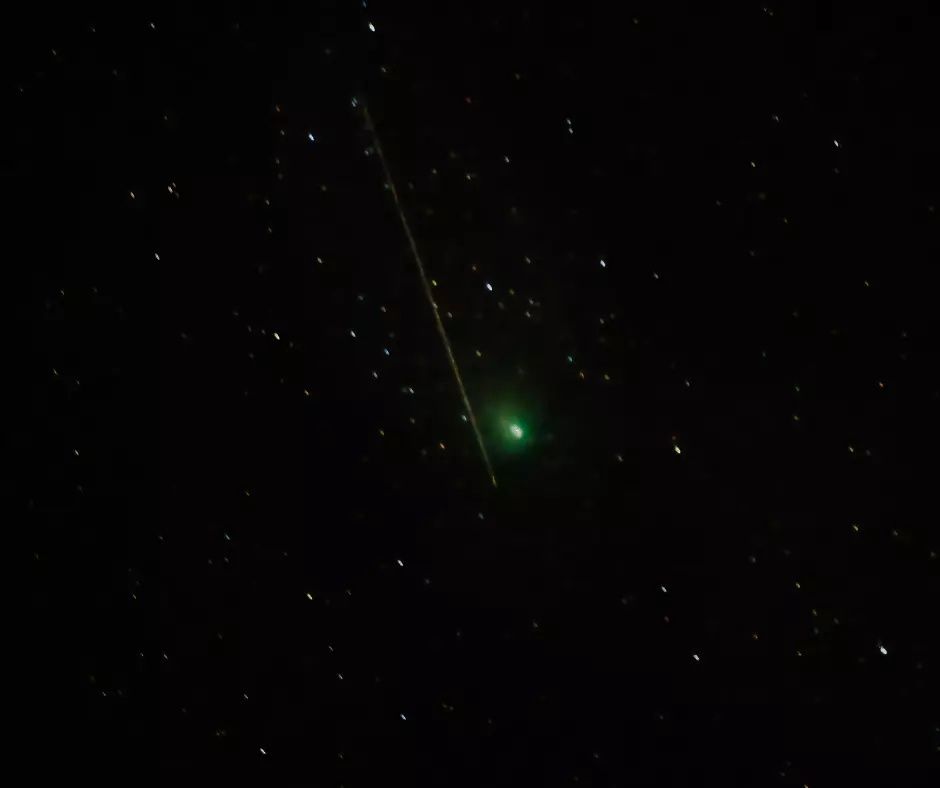
Comet C/2022 E3 (ZTF)
Comet C/2022 E3 (ZTF)
GALE:
The Scottish Highlands are blessed to have very dark night skies, ideal for stargazing. In February, a green comet, C/2022 E3 (ZTF), passed by Earth that hadn’t been seen in 50,000 years (not since the Stone Age!). Are there any other rare sights coming up this year that have astronomers excited? What should we be looking out for?
Dr. Alec MacKinnon:
Hmm. I had to think what sort of answer to give. My answer might be different from other people’s! We might say there are two sorts of rare events: expected and unexpected.
The Expected
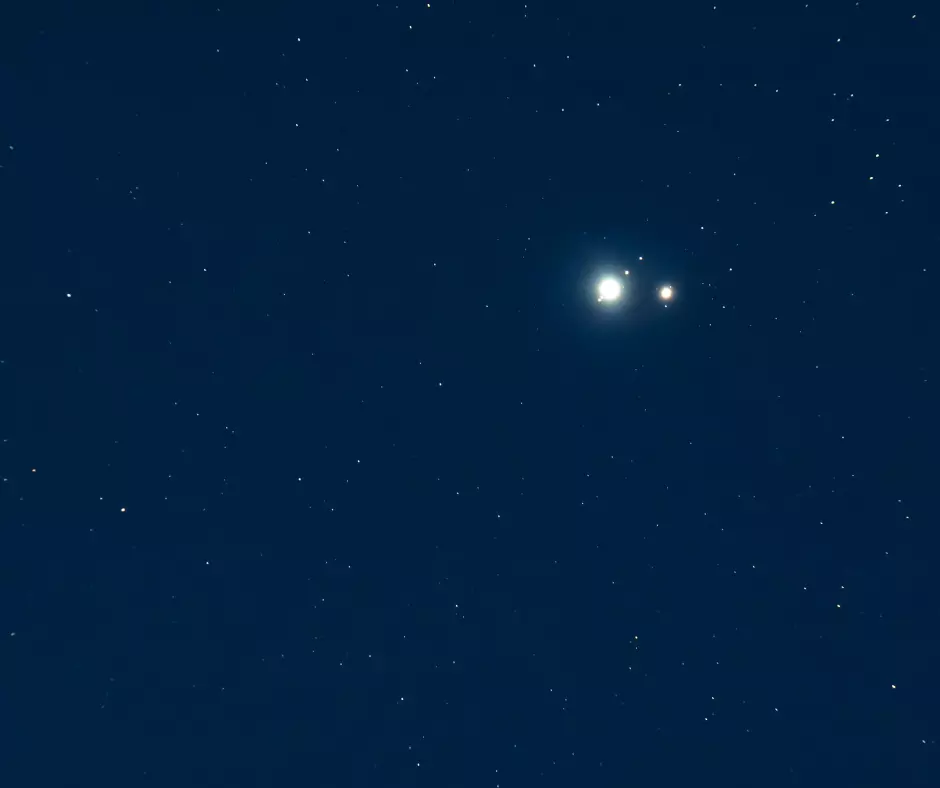
A couple of years ago we saw a conjunction of Saturn and Jupiter, a time when the two bright planets came very close together in the sky. We won’t see them this close again until 2080. Lots of people saw it happen and, in this age of easy digital photography, took nice pictures. But it was completely expected. Lovely to see but we didn’t learn anything new from it.
Eclipses of the Sun and Moon come into the same category. Both are really beautiful. A total eclipse of the Sun is quite awe-inspiring, and something very rare. For a solar astronomer, to see the Sun’s outer atmosphere, the corona, with your own eyes is a special experience. However there won’t be another visible anywhere in Britain until 2080 and even then Gairloch won’t benefit – sorry! Total eclipses of the Moon are less rare but we still have to wait until 2025 for one of those.
The Conjunction of Saturn and Jupiter
Many of these completely predictable rare events are listed on the excellent timeanddate.com website.
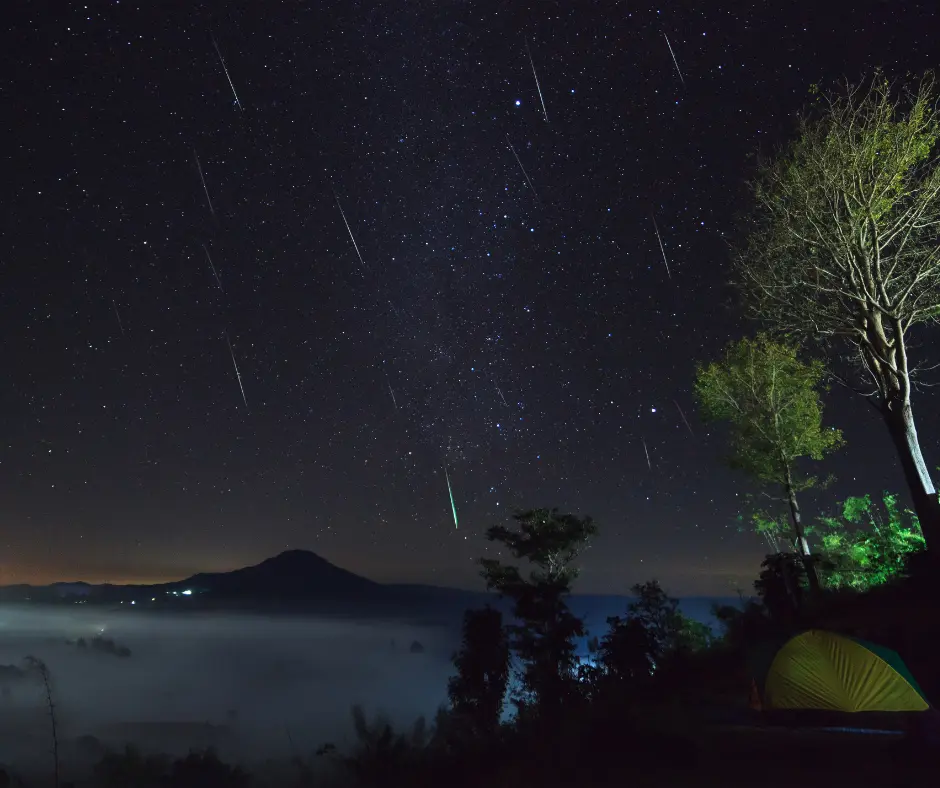
Meteor showers, displays of many “shooting stars”, are also quite predictable. Individual meteors are not, however, nor is exactly how many meteors you’ll see. People in the Highlands have a much better view of these because the fainter meteors get lost in urban light pollution. The best nights of the years are normally 12 August (Perseid meteors) and 13 November (Geminid meteors) and it’s well worth looking a night or two on either side. A few years ago I met some of my students on the Eaglesham Moor road, just south of Glasgow where the sky starts to get darker, on 13 November. One of them did a little project on the meteor shower and counted 50 meteors in as many minutes – easily enough meteors to be exciting.
A Perseid Meteor
Geminid Meteor Shower
The Unexpected
I get most excited about things we don’t expect. Comets, for instance, sometimes get bright in the sky with only a few months’ warning. There is a comet now steadily making its way in to the inner solar system which may become quite bright, easy to see, in September 2024. I don’t think any others are known just now that will reach naked eye brightness but one might be discovered, further from the Sun, brightening steadily, at any time.
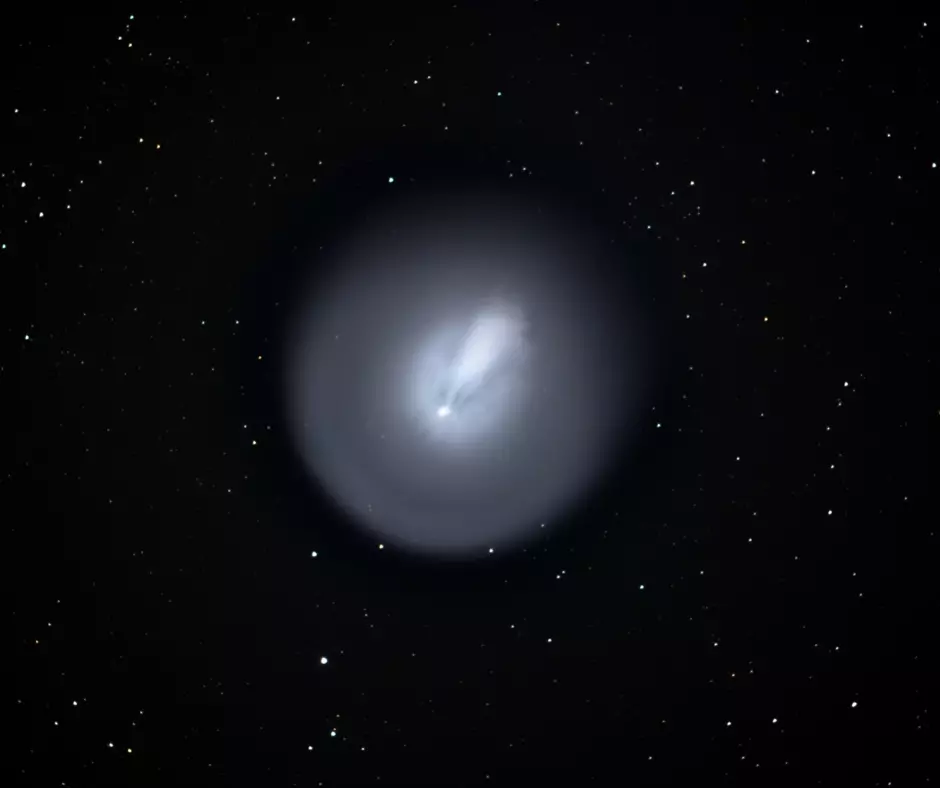
Comet Holmes
Anyway, for September 2024, watch out for Comet Tsuchinshan-ATLAS. The unpredictability of comets is certainly part of their attraction. Older people (like me!) will remember Comet Kohoutek which looked like it was going to be spectacular but failed to deliver. Others might become nicer, brighter than expected, Comet Holmes in 2007 for example.
We already discussed the Northern Lights, aurora borealis to give it its fancier name. The occurrence of these will pick up over the next few years, as the Sun climbs to the peak of the sunspot cycle, but predicting precisely when you might see them is only possible with a day or two’s notice, dependent on what’s been happening on the Sun, and never possible with complete certainty because it depends on how exactly the Coronal Mass Ejection evolves as it travels away from the Sun and on exactly what happens when it arrives at Earth.
Although it isn’t obvious glancing casually at the sky, many stars vary in brightness. Some of these do so quite predictably but many more are less predictable so you don’t know precisely how they will brighten or fade without just watching them patiently, over days or weeks. The famous bright star Betelgeuse is an example and there is even a Twitter account devoted to documenting its variations, @betelbot An entertaining business for somebody that enjoys such careful, detailed, attentive activity.
Betelgeuse is one of the nearest examples of a massive star that will end its life in a spectacular, cosmic-scale explosion: a supernova; hence some of the interest in its brightenings and fadings. There hasn’t been a supernova to see in our own Milky Way galaxy since 1604. That would be something extremely rare, unexpected, and scientifically fascinating.
I still hope there might be one while I’m alive.
Thank you, Dr. MacKinnon, for your insight! As always, it’s been fascinating. The Dark Skies Festival will be returning to Gairloch in November 2023. For more information, visit the Wester Ross Biosphere website.
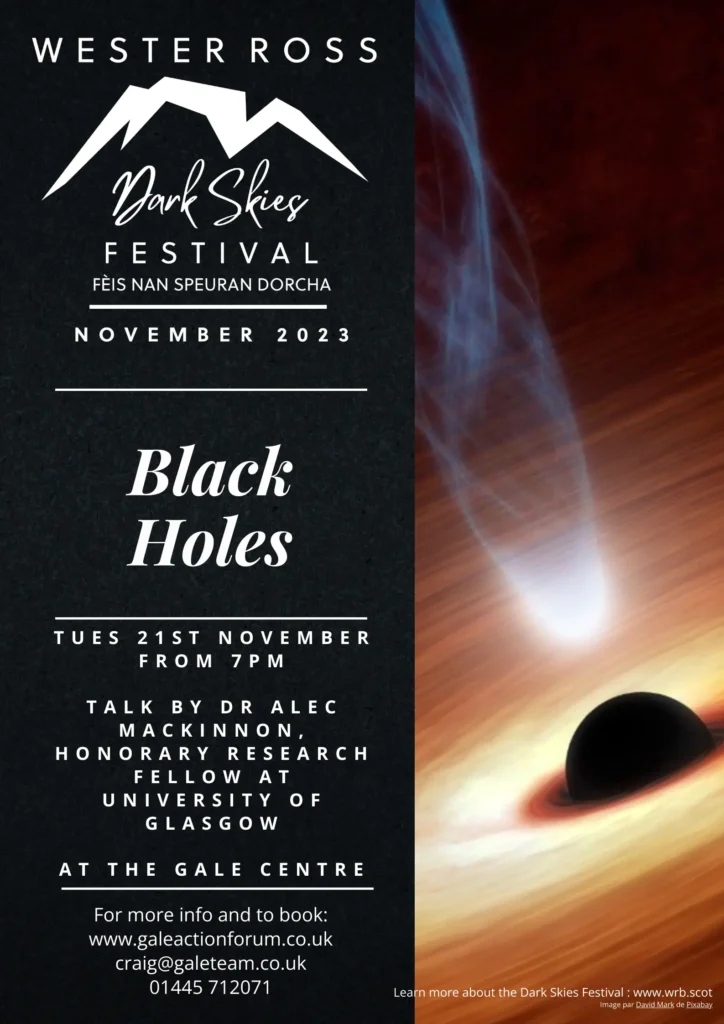
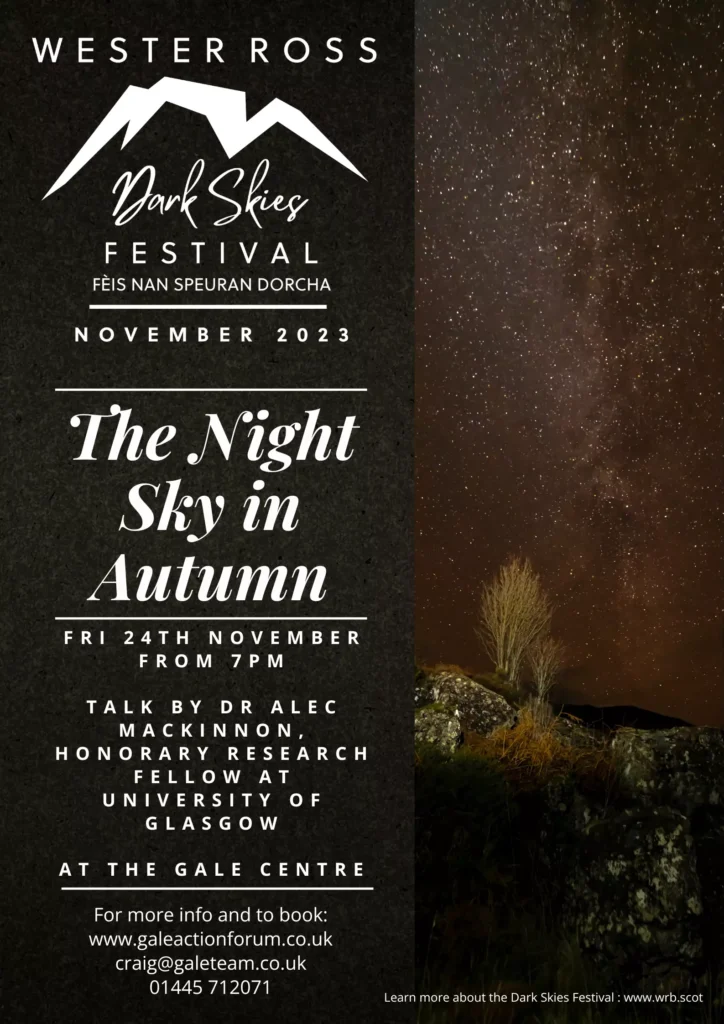
Dr MacKinnon will be at The GALE Centre in November with two lectures which are sure to enthral and entertain. Click on the images below for more details.
And if you fancy a little stargazing yourself, why not check out these books from the GALE Centre gift shop to help you identify the planets and constellations: