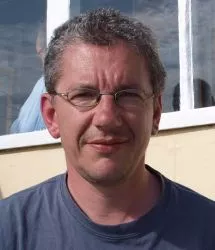
Welcome to our series of blogs where we have the opportunity to engage in conversation with Dr Alec MacKinnon, a renowned astrophysicist from the Department of Astrophysics at Glasgow University. It is a pleasure to have Dr MacKinnon with us as we delve into the fascinating world of astrophysics and explore the mysteries of the universe. In the lead up to the Wester Ross Biosphere Dark Skies event we will post weekly – so make sure to come back.
Dr MacKinnon will share his expertise, insights, and opinions on several topics, providing us with a deeper understanding of the universe we inhabit. So, sit back, relax, and join us on this journey of discovery as we explore the wonders of the cosmos with Dr Alec MacKinnon..
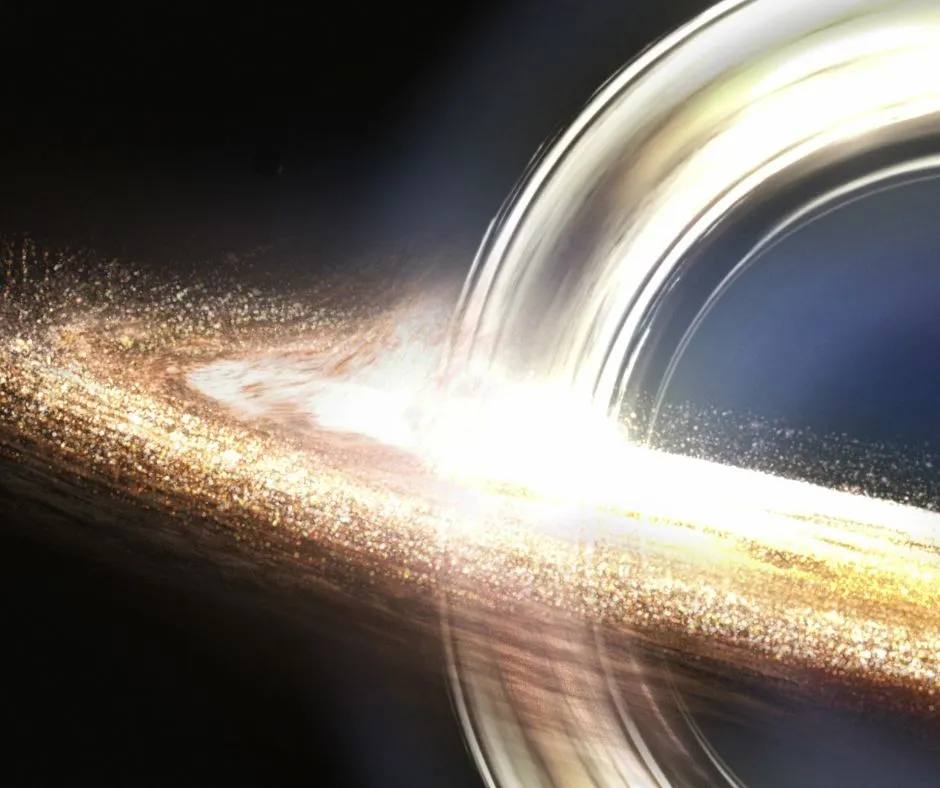
GALE: Most people are absolutely fascinated by black holes. And there is a giant black hole at the centre of the Milky Way Galaxy, in which the galaxy is orbiting around. Is there any fear of Earth some day being sucked into this black hole?
Dr Alec MacKinnon: No, Earth follows its stable orbit around the Sun, and the Sun orbits around the centre of the Milky Way galaxy. If one crosses the boundary of a black hole, the ‘event horizon’, it is impossible to come back. Close to a black hole things look strange. But if you’re a long way from a black hole, far away from the event horizon, it doesn’t really matter that it’s a black hole, it’s just a lot of stuff. The black hole at the centre of our own galaxy is believed to have about 6 million times the mass of the Sun. But it is so far away that it has the same gravitational pull as 6 million stars the same as the Sun, a small fraction of all those in the galaxy – there is effectively no modification due to the fact it’s a black hole. You don’t get ‘sucked’ into black holes any more than you get sucked onto the Moon, into the Sun or another star, etc. The Sun, and with it the rest of the solar system, will continue in its stately, 100 million year orbit around the centre of the galaxy, unconcerned by whether it’s a 6 million solar mass black hole that resides there or 6 million suns
GALE: It’s interesting that black holes appear at the centre of a lot of galaxies. Is it simply because black holes have so much gravity that star systems get pulled around their orbit? Or do black holes somehow play a part in galaxy formation?
Dr Alec MacKinnon:That’s a great question! And one which many people are trying to answer. If black holes somehow form very early in the history of the Universe, then perhaps they would become seeds for the formation of the galaxies. If a supermassive black hole forms this can affect the evolution of its host galaxy. Material (stars, gas) falling onto the black hole releases energy to power jets of material which can either drive formation of more stars, further out in the galaxy, or even, possibly, blow all the remaining spare gas off so that no more stars can form. Black hole formation might also be connected to galaxy mergers, which certainly play a role in getting us to the present state of affairs with a variety of galaxy shapes and sizes. The full story, however is still being unravelled. I think we can expect critical observations to come particularly from the James Webb Space Telescope
GALE: I’ve read that the opposite of a black hole is a white hole – in which matter is spewed out. But these white holes supposedly do not exist because they’ve never been observed. But, to me, the Big Bang sort of sounds like a white hole. Why isn’t the Big Bang considered a white hole? We are taught that just before the Big Bang, matter was very tightly condensed – which sort of sounds like matter inside of a black hole. Could a black hole lead to a big bang in a parallel universe?
Dr Alec MacKinnon:
I can’t claim to know much about white holes, to be honest. They are not discussed very much. Making a wee search in the literature I did come across one person pursuing the idea that the Big Bang should be thought of as a white hole – but only one. My own first reaction is that a white hole is embedded in a bigger spacetime. Stuff comes out of it, yes, but the universe is getting bigger, not expanding into anything. To be thought of as the Big Bang, the white hole would have to comprise everything, space, time, etc., not only exist within some bigger spacetime.
It’s equally possible that the Big Bang, and the expanding universe subsequently, can be thought of as the event horizon of a black hole. All of our universe could be the interior of a black hole in another Universe. Black holes in our universe may have other Universes inside them. All speculative talk, of course – there’s no way for us to learn about any regions outside the boundary of our own Universe, or inside the event horizons of black holes within our own Universe – but consistent with how black holes work.
Fun speculations! And they can lead to further fun speculations, like Lee Smolin’s idea of “natural selection of universes”. This might provide an explanation for the fact that the laws of physics and the fundamental constants in our universe appear rather finely tuned so as to ensure our emergence. You can read more on that topic here.
Thank you, Dr. MacKinnon, for your insight! As always, it’s been fascinating. The Dark Skies Festival will be returning to Gairloch in November 2023. For more information, visit theWester Ross Biospherewebsite.
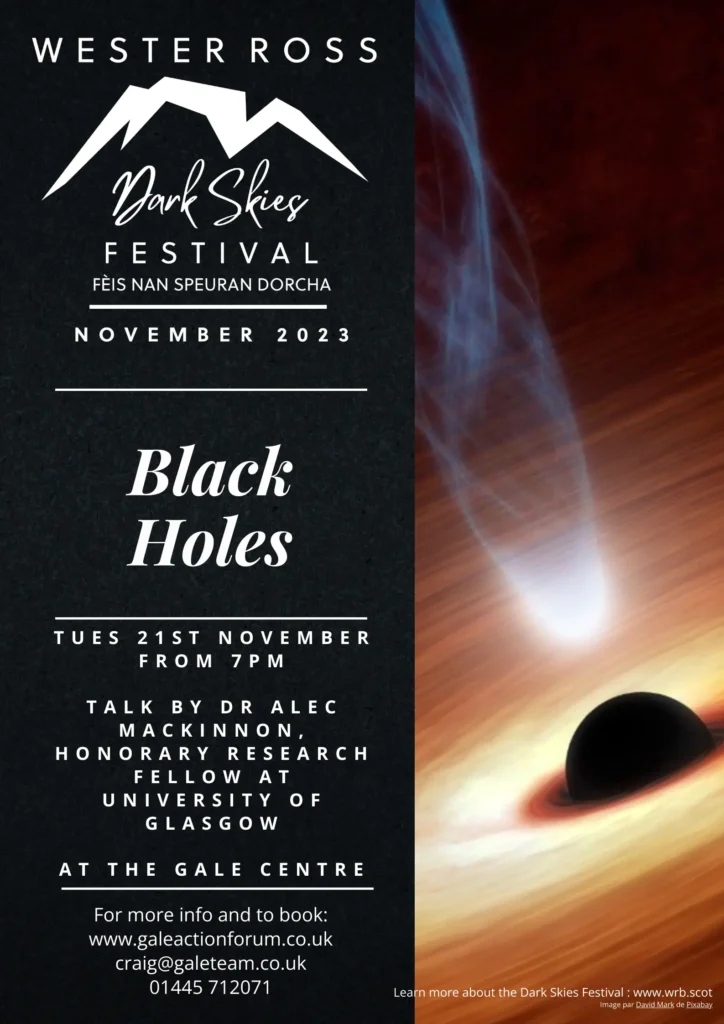
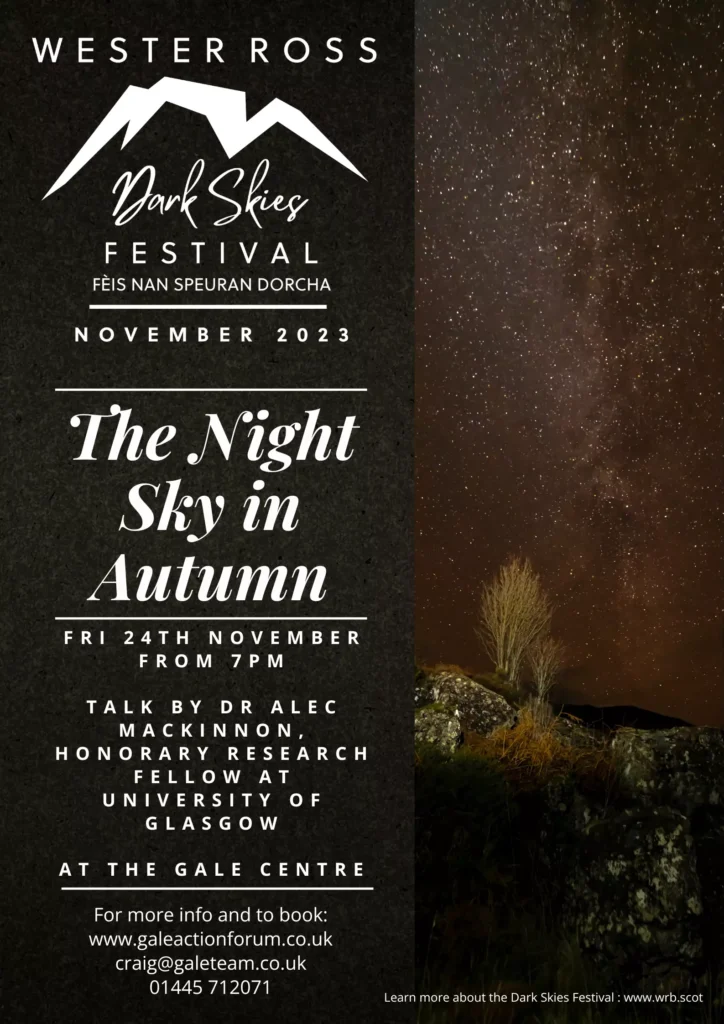
Dr MacKinnon will be at The GALE Centre in November with two lectures which are sure to be enthral and entertain. Click on the images below for more details.
And if you fancy a little stargazing yourself, why not check out these books from the GALE Centre gift shop to help you identify the planets and constellations: