
Interview with Director Gordon Butler
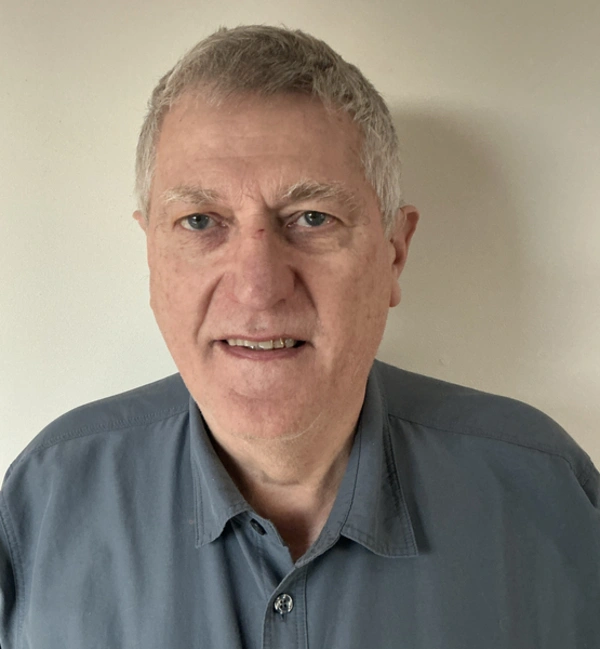
In this insightful interview, we sit down with Gordon Butler, recently appointed as a Director of GALE, who brings a wealth of experience and a unique perspective to the organisation. With a professional journey that began in accountancy and a noteworthy stint as the Managing Director of Milne Craig, Gordon has a solid foundation in financial management and an understanding of the intricacies involved in running a successful charity. His early aspirations to become a professional footballer laid the groundwork for a diverse career path that ultimately led him back to his roots in accountancy.
Gordon’s extensive background in finance is complemented by his strong values of honesty and integrity, which he believes are essential in driving GALE’s mission forward. As he notes, “When you say you are going to do something, you should do it.”
Congratulations on your appointment to the GALE Board in December. Can you share a bit about your background, including your professional journey and personal values, and how these experiences have shaped your decision to join the GALE Board?
When I left school I didn’t really know what I was going to do, except I really thought I wanted to play football. I joined an accountancy firm because my father knew the guy who was a senior partner. At the same time I was playing amateur football for Queen’s Park. Within the first six months of my accountancy journey, I had the opportunity to play professionally for Sheffield United. So, I got my chance to play football at a good level but in the end failing distance eyesight and a realisation that, at that time, the pension prospects for a professional footballer weren’t great, I returned to the path of a being a chartered accountant.
I started out at KPMG (as they are now known) before eventually transitioning to Milne Craig where I served as Managing Director for nearly two decades. During that time the firm grew to nearly 100 employees and had a turnover n excess of £5 million.
GALE has reached a point where its turnover is of a size where having a chartered accountant on the board is helpful. Although, I’m retired, I help a lot of people and businesses with their accountancy and tax issues and I’m happy to do the same for GALE.
What unique skills or perspectives do you believe you bring to the board that can help advance GALE’s mission?
Along with my professional background, I value honesty and integrity. I think people should behave ethically. When you say you are going to do something, you should do it. You could say I’m driven and I hope that will benefit GALE.
As the ‘numbers guy’ at GALE, we should take the time to ask a few questions around the finances. What is GALE’s current annual turnover, and how has it changed over the past few years?
The turnover has been around the £500K mark for the last three years. As a registered charity that’s a significant milestone as it requires a full audit of the accounts. Audits are done by an external auditor who reviews GALE’s financial statements and provides assurance that the accounts are free from material misstatement, whether caused by fraud or other irregularity or error. In the last few weeks, I have been assisting GALE in the preparation for the audit of the 2024 accounts.
The finances of charities are subject to more scrutiny than a lot of companies. At £500K, charities have a lower threshold for audit than companies where the turnover threshold is £10 million.
How does GALE prioritise its budget to ensure that essential programs and services are funded while maintaining financial sustainability?
The general day to day running of GALE is funded from retail and cafe sales. Other specific projects are funded through grants but may have some financial support from surpluses generated by Centre operations. Funding of GALE can only come from one of three sources, trading income (including donations), grants, and loans. Grant funding is restricted and can only be used for the purpose for which it was designated.
There is no magic money tree. GALE operates on a not for profit basis, so any surpluses are poured back into operations. The organisation has a strong track record of successful grant applications and I would anticipate this continuing.
How does GALE measure the economic impact of its operations on the local area, particularly in terms of job creation and supporting local businesses?
Beyond turnover, GALE measures pretty much everything all the time. Alongside the financial accounts systems GALE also keeps what they call social accounts. These are figures relating to the social, economic, and environmental impact of operations. Much of the data collected is included in grant funding or required by funders as part of the ongoing operation of a project.
If you could invite any three people, living or dead, to a community event at the GALE Centre, who would they be?
I would love to bring Jimmy Reid, Boris Johnson and Nigel Farage together for lunch. Jimmy Reid was the spokesperson for the Upper Clyde Shipbuilders in the early 70s. He was a friend of my father and I met him on more than one occasion. He was a man who was really clear in being able to put across his point. All three are big personalities with differing views of the world and I’d love to sit on a discussion where they are explaining their views to one another. So I think you have the makings of a fantastic discussion, as long as you keep it controlled!