
Embracing Inclusive Ownership Models
Rural Economic Resilience
Introduction
One of the most significant challenges many rural economies face today is the fragility of their economic structures. This fragility can be attributed to a lack of diversity in business ownership models, which often concentrates wealth and power in a few hands, leaving the majority of the community vulnerable. However, a recent survey by the Highlands and Islands Enterprise (HIE) has highlighted a promising trend – the adoption of inclusive ownership models.
Key Findings from the HIE Survey
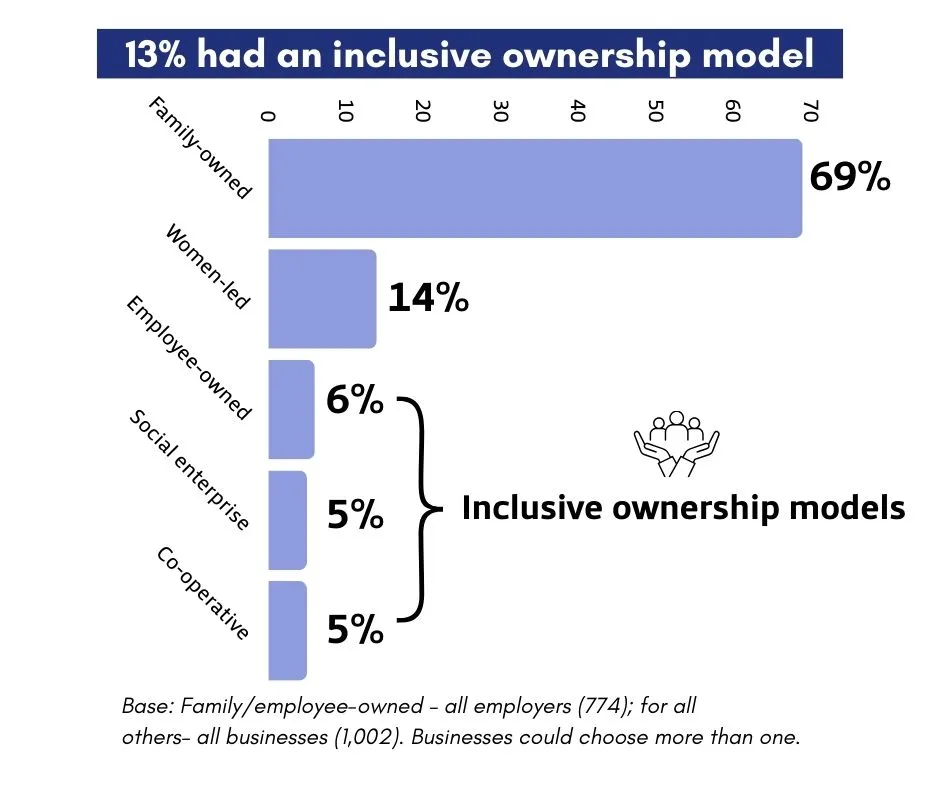
The HIE business panel survey, conducted in November and December 2023, revealed insightful data about the current state of inclusive ownership models in the Highlands and Islands. Approximately 13% of businesses in the region have adopted an inclusive ownership model, such as social enterprises (like GALE), employee-owned, or co-operative businesses. This is a significant percentage considering the overall rural context. The primary motive driving these businesses towards inclusive ownership models is the desire to keep wealth within the local community.
Despite the benefits, a vast majority (88%) of businesses surveyed were not considering adopting an inclusive ownership model. However, there was a small percentage who expressed interest in learning more about these models (7%), indicating potential growth in this area.
The Significance of Inclusive Ownership Models
The HIE survey shows that the businesses adopting inclusive ownership models are primarily driven by the desire to keep wealth within the community. This is a clear testament to the role these models play in fostering local economic resilience. By redistributing wealth and power, these models create a sustainable economic ecosystem where profits are reinvested into the community, leading to job creation, better wages, and improved local services.
The Social Enterprise model, an exemplar of inclusive ownership, is particularly suited to rural communities. By prioritising local ownership, social enterprise, and community benefits, this model helps to build a robust local economy that is resilient to external shocks and capable of sustaining growth. It’s the model which is the foundation of GALE’s work.
The Role of Community Wealth Building
Community Wealth Building (CWB) aligns perfectly with the goals of inclusive ownership models, emphasising local and broad-based ownership. Interestingly, the survey also highlighted the role of CWB activities in the region. In the Highlands and Islands, businesses are more engaged in CWB compared to the South of Scotland.
For example, Highlands and Islands businesses were more likely to be taking actions that reflected the tenets of CWB (92% vs 89% in the South of Scotland), to have inclusive business models (13% vs 9%), to be taking actions to benefit the local community (79% vs 72%), and to want to do more for their local community (49% vs 41%).
Conclusion
The HIE survey underscores the importance and potential of inclusive ownership models like GALE in rural communities. While only a minority have fully embraced these models, there is a clear appetite for more knowledge and understanding. As we move forward, it is crucial to continue promoting these models and the benefits they offer to our local economy.