Welcome to our series of blogs where we have the opportunity to engage in conversation with Dr Alec MacKinnon, a renowned astrophysicist from the Department of Astrophysics at Glasgow University. It is a pleasure to have Dr MacKinnon with us as we delve into the fascinating world of astrophysics and explore the mysteries of the universe. In the lead up to the Wester Ross Biosphere Dark Skies event we will post weekly – so make sure to come back.
Dr MacKinnon will share his expertise, insights, and opinions on several topics, providing us with a deeper understanding of the universe we inhabit. So, sit back, relax, and join us on this journey of discovery as we explore the wonders of the cosmos with Dr Alec MacKinnon.
GALE: It’s mind boggling to think that there are stars that are so far away from us that their light hasn’t even reached us. Since the universe is expanding faster than the speed of light and distant galaxies are moving further away from one another, does that mean the light from these distant stars will never reach us?
Dr Alec MacKinnon:
Well, my first thought is that the Universe doesn’t owe us any information about those other stars .😊 There could well be regions of the Universe from which information will never reach us, or certainly not in any practically useful time.
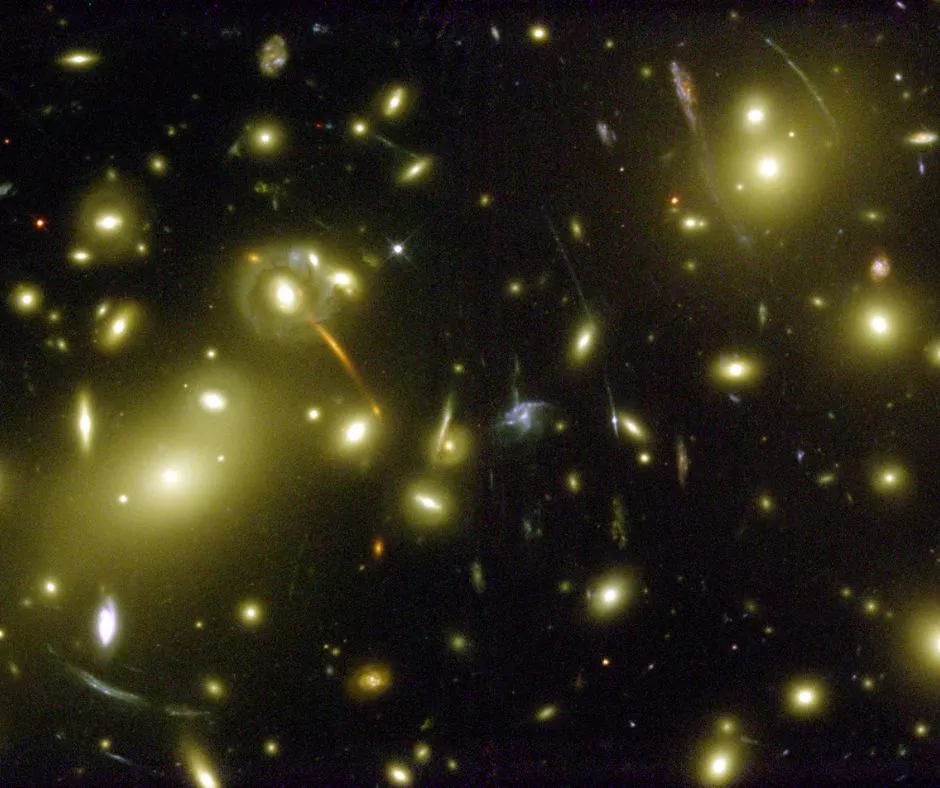
Actually the expansion of the Universe helps us a bit. The Universe is 13.8 billion years old. The light year is the distance light travels in a year, about 6 million million miles. So we wouldn’t expect to see anything further away than 13.8 billion light years (which we can convert into a very large number of miles or km if we want). However we can actually see a bit further than this. Suppose light gets emitted in our direction by a star early in the history of the Universe. It travels through space towards us, but against the background of the expanding Universe. T gets caries along with the Universe as it expands, so we can actually see further than 13.8 billion light years, in principle to a distance of about 46 billion light years.
As time goes on, light from galaxies further and further away will reach us for the first time. More galaxies will appear in the future but the expansion of the Universe appears to be accelerating, because of the mysterious ‘dark energy’. So light from galaxies far enough beyond the current ‘horizon’ has to cover an ever-increasing distance and will never actually reach us. We don’t know how much Universe there is beyond the current horizon and it could certainly be big enough that light from parts of it will never reach us.
GALE:
Astrophysicists often use a balloon to demonstrate how the universe is expanding. They draw some dots on the balloon to represent stars and as the balloon fills with air and expands, the dots are pulled further and further away from one another. It’s a helpful demonstration, but most astrophysicists actually think the universe is flat. I can conceive how a spherical universe would appear never ending and without edges. But how can a flat universe have no edges or no end, especially if it’s expanding? Isn’t there a space in which the universe is expanding into? And wouldn’t this space be an edge?
Dr Alec MacKinnon:
We’re in quite esoteric territory here. The issue here is really the word ‘flat’. This word is being applied to four-dimensional spacetime, not just the three-dimensional space we can draw at any instant. The word ‘flat’ is used by analogy with the properties of a flat plane, as opposed to the curved surface of a sphere or some other shape, for instance with the shape of a saddle.
We can imagine three possible ultimate fates for the Universe. It might expand forever, getting bigger and bigger. We call this an ‘open’ universe. Or it might contain enough matter that the pull of gravity of all the bits on each other eventually brings the expansion to a halt, after which it starts to fall back in on itself again. We call this a ‘closed’ universe. In between these two possibilities we have a ‘flat’ universe: the universe continues to expand, but slower and slower, getting closer and closer to an ultimate, maximum size but never quite getting there.
We believe spacetime has a ‘flat’ geometry, with matter and expansion in balance – but with the added ingredient of dark energy that causes the rate of expansion to accelerate.
Thank you, Dr. MacKinnon, for your insight! As always, it’s been fascinating. The Dark Skies Festival will be returning to Gairloch in November 2023. For more information, visit theWester Ross Biospherewebsite.
Dr Mackinnon will be at The GALE Centre in November with two lectures which are sure to enthral and entertain. Click on the images below for more details.
And if you fancy a little stargazing yourself, why not check out these books from the GALE Centre gift shop to help you identify the planets and constellations: